


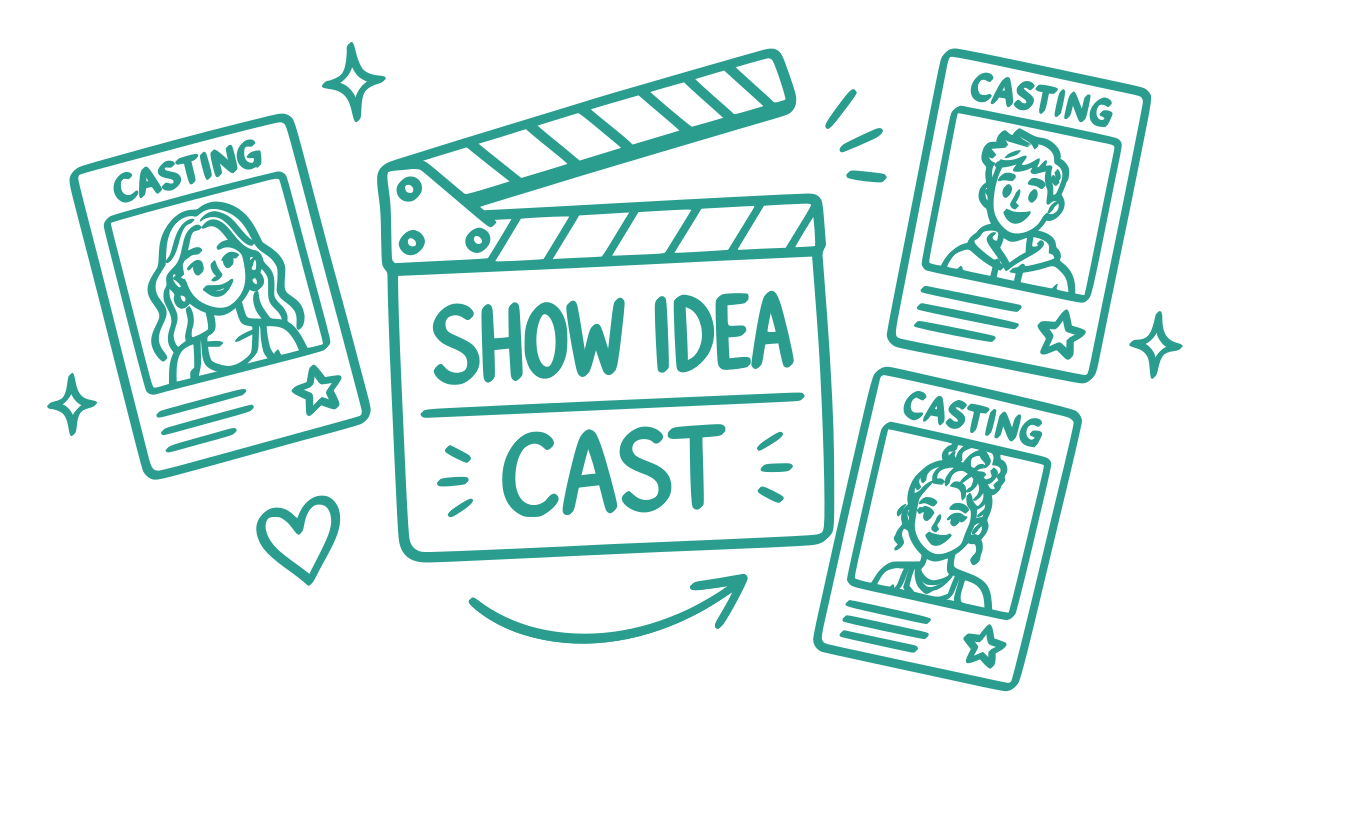
A reality TV casting plan is not just a list of people who might appear on camera. It is the answer to one of the first questions producers ask: Who are we watching, and why are they worth watching?
For first-time creators, that question can be an opportunity. Many strong unscripted ideas begin with real people the creator already knows: a family business, a strange workplace, a friend group, a local expert, a community, or a world that has not been overexposed on television.
The cast does not need to be famous. But they do need to be specific, reachable, and capable of generating real moments on screen.
Why first-time creators should start with people they can access
For first-time creators, the strongest reality TV opportunities often come from real people they already know or worlds they can actually reach. That might mean a family business, a workplace, a friend group, a local expert, a subculture, a neighborhood, a team, a community, or a person living through an unusual chapter of life.
You may not have an agent, a production company, or a network relationship yet. But if you have access to unforgettable real people, that can matter.
Casting means identifying the real people who could carry the show. In scripted television, characters are written. In unscripted television, the people have to bring real personality, real stakes, real relationships, and real access.
A producer is asking whether these people can create scenes, conflict, humor, emotion, transformation, or surprise without everything being manufactured. A creator who knows the people, understands the relationships, and can help open the door may have something valuable before they ever write a deck.
The cast does not need to be famous. They need to feel real, specific, reachable, and worth watching.
Why real people matter in reality TV
A format can be smart. A world can be interesting. A subject can be timely. But in unscripted TV, people often make the show.
Producers often use the word “character” to describe a real person who is memorable on screen. That does not mean the person is fake. It means the person has a clear role in the story world. The person is specific, legible quickly, emotionally alive, connected to other people, capable of creating or receiving pressure, different from the people around them, and in motion rather than static.
A person can be fascinating in real life but still hard to build a show around. Producers need to understand not only who they are, but how they generate repeatable story.
Viewers come back for personalities, relationships, conflict, humor, transformation, vulnerability, expertise, access, and emotional stakes. Even a strong format needs people who make the structure matter.
A dating format is more than rules. It needs people with real hopes, baggage, choices, and chemistry.
A renovation show is more than houses. It needs homeowners, experts, families, budgets, pressure, and emotion.
A workplace show is more than a business. It needs personalities, conflict, hierarchy, humor, and consequences.
A docu-follow series is more than a world. It needs people who want things, collide, choose, and change.
If the people are flat, the pitch feels flat.
What makes someone compelling on screen?
Watchable does not always mean loud, dramatic, or polished.
Some people are watchable because they are funny. Others are watchable because they are emotionally open, deeply skilled, unpredictable, under pressure, unusually honest, or living inside a world viewers rarely get to see.
A strong reality TV cast member usually gives producers at least one of these things:
- A clear point of view
- A real goal or problem
- A relationship dynamic
- Access to a specific world
- A reason to care
- A source of tension, humor, or emotion
- The ability to be natural on camera
The question is not whether the person seems “TV-ready.” The question is whether viewers would want to spend time with them.
Cast around access, not just personality
Personality matters, but access is what makes the pitch more concrete.
Producers will ask whether you know these people, whether you can credibly approach them, whether they would consider participating, and whether they have a real world, business, family, community, or process around them.
A random funny person may not be enough. A funny person inside a family business under pressure is much stronger.
A charismatic expert may not be enough. A charismatic expert with clients, cases, transformations, or conflict is stronger.
Access turns personality into a pitchable world.
Cast around relationships and pressure
A reality TV cast is not just a list of interesting people. It is an ecosystem. The strongest casts create story because people want different things, see the world differently, and affect each other in specific ways.
Look for four kinds of cast energy.
1. Contrast
Contrast creates friction. Two people may want the same goal, but want it in completely different ways. One is careful; one is reckless. One wants growth; one wants control. One wants tradition; one wants reinvention.
Controlled friction is useful because it creates scenes.
2. Complement
Not everyone can be chaos. A strong cast also needs heart, stability, competence, vulnerability, warmth, or emotional grounding.
The audience needs someone to trust, root for, or understand. Complementary roles keep the show from becoming noise.
3. Pressure
Who pushes? Who resists?
In a good scene, somebody usually applies pressure and somebody responds to it. That pressure may be emotional, financial, romantic, professional, social, or creative.
If nobody pressures anyone, the show may feel passive.
4. Evolution
What can change over time?
A cast-driven show needs movement. Relationships shift. Goals escalate. Alliances change. Consequences build. Someone grows, fails, leaves, returns, forgives, competes, or finally says what they mean.
If everyone is in the same place by Episode 4, the concept may feel static.
What makes a great reality TV cast?
Reality TV casting is not about collecting “big personalities.” It is about finding people who create real situations.
Ask:
- Who wants something?
- Who disagrees?
- Who has history?
- Who is under pressure?
- Who changes the room when they walk in?
- Who reveals a side of the world we would not otherwise see?
You should be able to pitch each key person in one vivid sentence. Use this template:
[Name] is a [specific role or hook trait] who wants [primary drive], but [fear/flaw/pressure] keeps getting in the way, especially when [trigger].
For example: “Maya is a perfectionist wedding planner who wants to take over her family’s event business, but her fear of disappointing her father keeps her from changing the outdated traditions that drive her crazy.”
Break it down:
- Hook trait: The instantly legible quality.
- Primary drive: What they want or chase.
- Fear or flaw: The vulnerability or contradiction.
- Trigger: What reliably creates friction.
Do this for every key person. If two people read the same on paper, they may blur on screen.
Put the cast on camera
Before you promise that someone is great on screen, try filming them.
A short casting tape, interview, phone video, Zoom recording, or simple scene can help you understand whether the person is natural, specific, expressive, and comfortable enough to carry the idea.
The video does not need to be fancy. It needs to show personality, comfort, and specificity. If your cast only works in your description, but not on camera, the pitch may need more work. For the next step, read how to make a sizzle reel for a reality TV pitch.
How to know if your cast can sustain a series
A cast-driven concept needs more than a few colorful personalities. It needs fuel.
Ask whether your cast has:
- Ongoing goals
- Real pressure
- Relationships that can change
- Conflicts that are not already resolved
- Stakes that matter
- A world with recurring situations
- Room for surprises
- Emotional openness
- Enough contrast
- A reason to be filmed now
A good cast should be able to generate more than one episode.
That does not mean they need constant drama. It means their lives, work, relationships, goals, conflicts, or environment can keep producing real situations.
A cast built around one event may be better for a special or documentary. A cast built around an ongoing business, mission, relationship, workplace, case flow, client base, or life transition may be better for a series.
Build the relationship map
Reality TV is rarely built around isolated people. It usually works because of relationships.
Create a simple relationship map showing family ties, friendships, rivalries, romantic history, work hierarchy, mentor/student dynamics, parent/child tension, sibling tension, boss/employee conflict, expert/client relationships, old wounds, shared goals, and competing agendas.
Then ask:
- Who naturally creates scenes together?
- Who avoids each other?
- Who knows each other’s secrets?
- Who can call someone out?
- Who has power?
- Who wants approval?
- Who is trying to change?
- Who refuses to change?
A strong relationship map helps producers see how story can happen without forcing it.
Verité vs. lightly produced situations
A people-driven show does not mean you follow people around and hope something happens. Most unscripted shows use a mix of observation and planned real-life situations.
There are two common approaches:
Verité: Observational, fly-on-the-wall filming. The camera follows real life as it unfolds.
Lightly produced situations: Real people are placed into planned scenarios that naturally draw out story, conflict, humor, or emotion.
Most reality shows use some version of both. That does not mean scripting lines or faking behavior. It means creating conditions where real relationships can do what they already do.
For example:
- A family meeting
- A client deadline
- A group trip
- A major reveal
- A business decision
- A competition day
- A homecoming
- A public event
- A difficult conversation
- A transformation reveal
The goal is not to fake drama. The goal is to put real people in real situations where their personalities, relationships, and stakes can show up naturally. You are identifying real situations where existing dynamics become visible.
Situations, not scripts.
Make ordinary people feel extraordinary
Not everyone needs to be famous. But they do need to be specific. Specificity is what makes ordinary people feel extraordinary.
Ask:
- What makes this person’s life, job, family, or world unusual?
- What details would surprise an outsider?
- What do they know how to do that most people do not?
- What is funny, emotional, strange, impressive, or high-stakes about their life?
- What problem keeps coming back?
- What do they care about too much?
- What makes their world visually or emotionally specific?
A small world can become a big show when the people, stakes, access, and details are specific enough.
The big question is: What is changing? If nothing is changing, the show may feel static. If something important is changing, producers can start to imagine an arc.
Common casting mistakes
Mistake 1: Casting only for big personality
Loud is not the same as watchable. Look for people with goals, pressure, relationships, and emotional range.
Mistake 2: Describing people as stereotypes
Avoid flat labels like “the villain” or “the crazy one.” Describe real dynamics instead.
Mistake 3: Assuming access without confirming it
If the show depends on specific people, make sure they know about the project and would consider participating.
Mistake 4: Ignoring relationships
Reality TV often comes alive between people, not just inside one person’s personality.
Mistake 5: Forgetting the camera test
Someone may sound great in a written pitch but feel stiff or unclear on camera. Get a simple sample if you can.
Mistake 6: Building around one moment instead of a series
A great event may not be enough. Look for people and worlds that can keep generating story.
Your deliverable: a cast discovery sheet
By the end of this step, you should have a simple cast sheet that explains who could carry the show.
- Name or role
- Connection to the world
- Why they are watchable
- Their goal, pressure, or conflict
- Key relationships
- Access status
- Camera sample, if available
- What they bring to the series
You should be able to explain who we are watching, why they matter, and what real-life dynamics could keep generating story.
How this helps on Showrilly
A strong cast makes your Showrilly pitch easier for producers to understand.
Your concept page can show the people, world, access, and supporting materials behind the idea. If you have cast descriptions, photos, a casting tape, sizzle, interview clips, or access notes, you can make those pieces visible instead of burying them in a long email.
That matters because producers often scan quickly. If your reality TV idea depends on real people, your pitch should help producers understand who they are, why they are watchable, and whether you can actually reach them.
Showrilly does not guarantee producer interest, meetings, development deals, or sales. But it does give you a structured place to organize the cast materials that help a reality TV pitch feel real. To decide whether video is needed yet, read need a sizzle reel to pitch a reality TV show.