



If you are developing a reality TV show idea, one of the first questions to answer is: what kind of unscripted show is this?
Many first-time creators use “reality show,” “docuseries,” “format,” “documentary,” and “competition show” interchangeably. That is understandable. To viewers, it can all feel like reality TV. But to producers, production companies, and networks, the differences matter.
Some unscripted ideas are strongest because of the people or access behind them. Others are strongest because of the structure that can repeat episode after episode. Many sit somewhere in between.
Knowing which kind of reality show you have helps you explain the concept clearly, target the right producers, and build the right pitch materials.
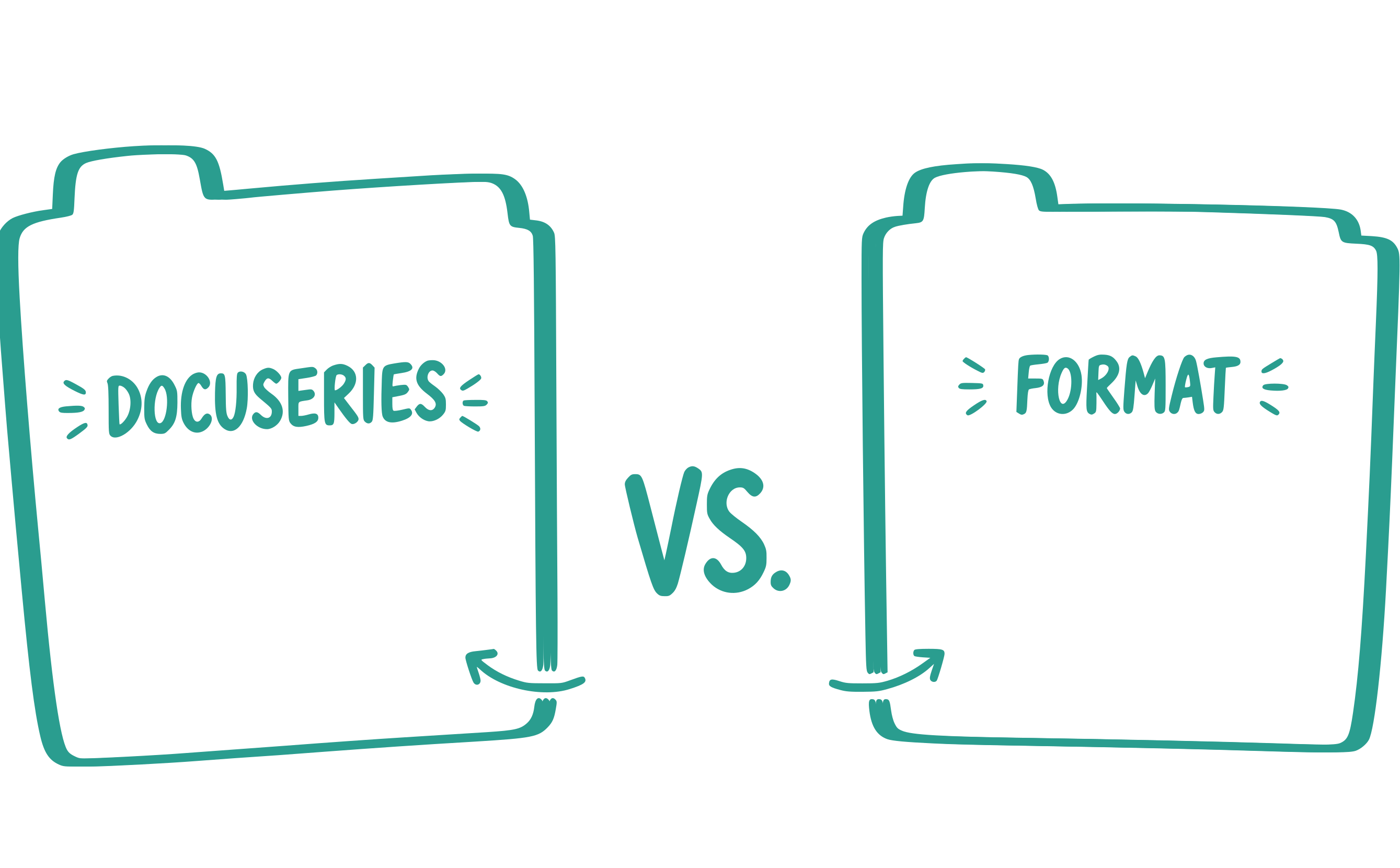
What is the difference between a docuseries and a format?
The simplest difference is this: A docuseries follows a real world, and is often driven by access, character, story, and observation. A format repeats a structure, driven by rules, repeatability, stakes, and episode design.
For example, a docuseries might follow one family-owned business over time. A format might visit a different struggling business each week, with experts diagnosing problems, making changes, and revealing the results.
A docuseries asks: What happens in this world?
A format asks: How does this structure work again and again?
Both can be reality TV. Both can be unscripted. But they are not pitched in exactly the same way.
The main question is: what drives the show?
What is a docuseries?
A docuseries follows real people, real worlds, or real events over multiple episodes. The story usually comes from access, relationships, character dynamics, personal stakes, work pressure, family tension, community, investigation, or unfolding real-life events.
A docuseries may have recurring situations, but it is not mainly driven by rules or competition mechanics. Producers are usually asking: Who are we following? What world are we entering? Why are these people worth watching? What access do you have? What can unfold over multiple episodes?
What is a reality TV format?
A reality TV format is built around a repeatable structure.
The format may include rules, rounds, challenges, matchmaking, judging, transformations, eliminations, scoring, expert decisions, or reveals. Different people can move through the same structure in different episodes or seasons.
Producers are usually asking: How does the show work? Who participates? What are the rules? What creates pressure? What is the payoff? Can the structure repeat?
How to tell which one you have
Ask yourself:
- Would the show still work with a totally different cast?
- Are there rules, rounds, scoring, eliminations, or reveals?
- Is the main draw the people and world, or the structure?
- Does each episode follow a repeatable process?
- Could another country produce its own version with new participants?
- Would changing the rules change the whole show?
- Would changing the cast change the whole show?
If the people and world are the main draw, you may have a docuseries. If the rules and process are the main draw, you may have a format. If both matter, you may have a hybrid.
Can a reality TV idea be both a docuseries and a format?
Many reality TV ideas sit between docuseries and format.
For example, a show might follow a real family business, but every episode also includes a client challenge, transformation, reveal, or expert-led process. Or a dating show might depend on real relationship dynamics, but still use clear rules, rounds, or matchmaking mechanics.
If your idea is a hybrid, explain both pieces:
- Who are we watching?
- What world are we entering?
- What repeats each episode?
- What are the rules or process?
- What makes the people worth following?
The mistake is not having a hybrid. The mistake is making producers guess which part drives the show.
What is a repeatable episode structure?
A repeatable episode structure is the pattern that creates story from one episode to the next. In a format, the structure may be obvious: a challenge, transformation, case, match, competition, or reveal. In a docuseries, the structure may be softer: a business trying to grow, a family under pressure, a team chasing a goal, or a community facing conflict.
A simple episode structure might sound like: Each episode follows a new client as the team transforms a chaotic space into a functional home.
Or: Each episode follows the family business as they take on a high-stakes custom job while personal tensions threaten the deadline.
Or: Each episode investigates a different unsolved local mystery through interviews, archival material, and new leads.
If you cannot explain the pattern, your idea may still be interesting, but it may not yet feel like a series. For a broader development pass, read how to develop a reality TV show idea.
What is a character-driven reality show?
A character-driven reality show is built around people viewers want to watch. The show may not have heavy rules, games, or competition mechanics. The cast drives the show. Their personalities, relationships, work, lifestyle, conflicts, humor, ambitions, and emotional stakes create the story.
Character-driven shows often work best when the people are specific, emotionally open, funny, intense, charismatic, or surprising, connected to a compelling world, facing real stakes, naturally in conflict or tension, or able to generate story without being forced.
A character-driven show can be a docuseries, an occuseries, a follow-doc, or a hybrid. The important question is whether the people are strong enough to carry the series. For more on that piece, read how to cast a reality TV show idea.
What is an occuseries?
An occuseries is an occupation-based reality series. It follows people doing a specific job or working inside a specific business, trade, industry, or professional world. The work itself generates story.
An occuseries might include unusual jobs, high-pressure deadlines, dangerous or visually interesting work, customer or client problems, workplace relationships, expert skills, business stakes, or a world most viewers do not usually see.
An occuseries is often a type of docuseries, but it can also have format elements. A show about a custom build shop, for example, might follow the same business every episode while each episode features a new project, client, deadline, and reveal.
What is a documentary series?
A documentary series usually has a more authored, journalistic, investigative, cinematic, or issue-driven approach than a typical reality TV series. It may follow a case, historical event, social issue, personal story, crime, sports season, cultural movement, or public figure.
The structure may be closed-ended, meaning it is designed as a limited series rather than an ongoing multi-season format.
A documentary series may be the right label if your idea is built around a specific investigation, a major event, a closed-ended story, archival material, interviews and reporting, a social issue or public question, a true crime case, or a limited narrative arc.
If your pitch depends on a single story with a beginning, middle, and end, it may be more of a documentary series than a repeatable reality format.
Why does the label matter when pitching?
The label matters because it tells producers how to evaluate the idea.
If you call your project a format, producers will expect a repeatable structure. They will want to know the rules, episode flow, stakes, casting logic, and what changes each week.
If you call it a docuseries, producers will look for access, characters, story, world, tone, and why the subject can sustain multiple episodes.
If you call it a documentary series, producers may expect a more specific narrative, investigation, or limited arc.
Using the right label helps producers understand what they are being asked to evaluate. It also helps you target the right companies. A company that makes premium documentaries may evaluate your concept differently than a company that makes competition formats, dating shows, lifestyle series, or workplace reality.
What if I use the wrong label?
It is not the end of the world, but it can create confusion.
If you describe your idea as a docuseries but spend the whole pitch explaining rules and weekly challenges, producers may wonder whether you actually have a format. If you call something a format but cannot explain what repeats, the pitch may feel underdeveloped.
A simple fix is to use a blended description. For example:
- “It is a character-driven docuseries with a repeatable workplace structure.”
- “It is a dating format built around a social experiment.”
- “It is an occupation-based reality series with a new client story each episode.”
- “It is a limited documentary series about one unfolding investigation.”
- “It is a hybrid docu-format built around real families and a repeatable transformation.”
These phrases help producers understand what the show follows and how it repeats.
What kind of pitch materials do you need for each type?
Different types of unscripted shows need different emphasis in the pitch.
For a docuseries, focus on:
- access
- characters
- world
- stakes
- tone
- storylines
- why now
- sample episodes
- visual style
For a format, focus on:
- rules
- episode structure
- repeatability
- stakes
- casting logic
- what changes each episode
- how it scales
- sample episode flow
For a documentary series, focus on:
- central story
- access
- subject matter
- evidence or reporting
- narrative arc
- characters or interview subjects
- why the story matters now
- visual approach
For a hybrid, you need both: the real world and the repeatable elements. A clear reality TV pitch deck can help organize those differences.
Common mistakes when choosing your show type
Mistake 1: Confusing a world with a show
An interesting world is a start, but viewers need people, pressure, and movement.
Mistake 2: Having no repeatable situation
If every episode requires inventing a totally new premise, the series may not have enough shape yet.
Mistake 3: Ignoring the cast
Reality TV depends on people. Even a great world needs characters who can carry scenes.
Mistake 4: Making the idea too broad
A narrower version of a reality idea is often easier to understand and pitch.
Mistake 5: Developing forever without testing the idea
At some point, you need to write the logline, shape the overview, and see whether the concept can be explained clearly.
Your deliverable: a clear show-type decision
By the end of this step, you should be able to describe your project as one of three things:
- A docuseries driven by real people, access, and unfolding story
- A format driven by rules, structure, and repeatable mechanics
- A hybrid that needs both real-world access and a clear repeatable process
Write one sentence that explains the decision:
This is a [docuseries / format / hybrid] because the show is mainly driven by [people, world, access, rules, process, challenges, reveals, or transformations].
How this helps on Showrilly
Choosing the right show type helps producers understand your pitch faster.
On Showrilly, your concept type, genre, tags, logline, and overview all help producers decide whether your idea fits what they are searching for. If your concept is a docuseries, make the people, world, access, and story clear. If it is a format, make the rules, structure, and repeatable process easy to see. If it is a hybrid, explain both.
The goal is not to pick a perfect label for its own sake. The goal is to help the right producer recognize what kind of show you are building.