





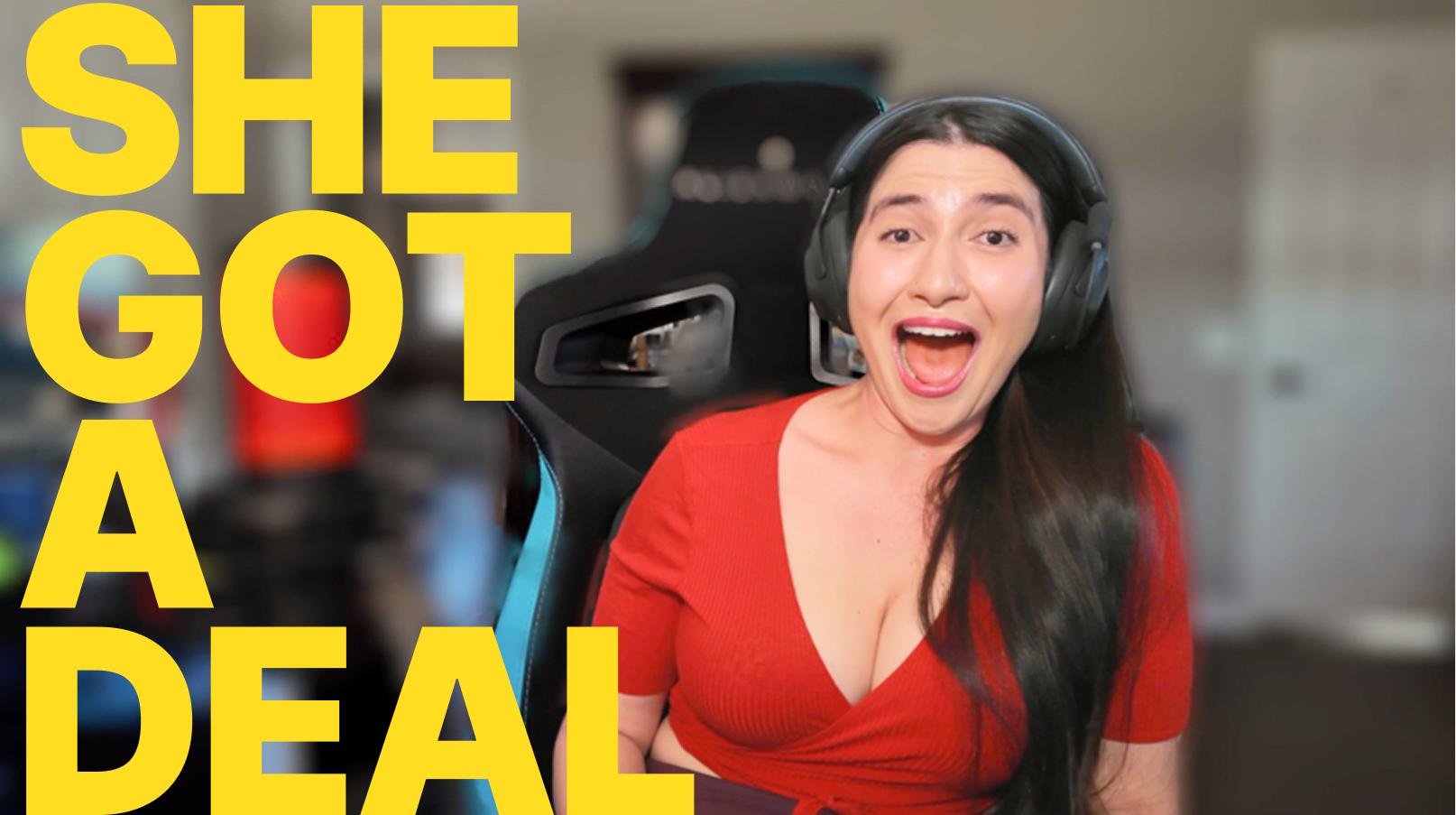
About Audrey
Audrey Lazzara is an unscripted creator and one of Showrilly’s earliest adopters. She has dreamed of working in entertainment since childhood and is drawn to real people, overlooked worlds, and stories hiding in plain sight. After years of developing and pitching ideas, a producer discovered one of her concepts on Showrilly and invited her to develop it together. Audrey now hopes to keep finding remarkable people and stories that might otherwise remain unseen.

How it happened
Audrey first conceived the project in 2017. Years later, she published it on Showrilly and waited for the right match. That match came after a producer had spoken with a buyer about a specific programming need, searched the platform, and found Audrey’s concept at exactly the right moment.
The connection began with an email titled “Producer Ping.” A call followed, the producer responded to Audrey’s idea, access, and attached talent, and the conversation became: “Let’s develop it.” Recorded the next day, this interview explores what led to the opportunity, why the concept stood out, and what Audrey learned from finally getting through an industry door that had previously felt closed.
A development deal is an important step, but it does not guarantee that a project will ultimately be commissioned or produced.
What you’ll hear
- How an idea Audrey first had in 2017 found the right producer years later
- What happened between the “Producer Ping” and the words “Let’s develop it”
- Why real access, attached talent, and knowledge of the project’s world mattered
- Audrey’s advice for writing a logline that producers cannot overlook
- Why strong pitching and flexibility both matter once development begins
- How the opportunity changed what Audrey believes she can do next
Transcript
Audrey’s Story and the Challenge of Breaking In
[00:00] Audrey Lazzara is the first Showrilly creator to land a development deal through a connection she made on the platform. There is a full circle part of this story because years ago, Audrey cold emailed me with an unscripted idea. It wasn't in my lane, but she kept going. She became one of Showrilly’s earliest creators, and now she's made her first deal. We recorded this conversation the day after it happened, so we're both still a little giddy.
[00:33] Audrey Lazzara, welcome. I'm so happy to see you here. Tell me a little bit about yourself and how you grew up and what's been your dream.
Oh. I grew up with really great parents and amazing parents. Can I say, they're very like weird and wacky, and they always were like, you know, be who you are, and they let me be unfiltered. So that's why I'm a freak as an adult, I guess. I'd say. Um, and my dream, since, I don't know, it sounds silly, but since I was a little kid, I'd have like these vivid, like lucid dreams about like working in the entertainment industry. And it was just something I really wanted to do and everyone thought I was going to become a doctor like my dad, but I don't know, it just, since I was a little kid, I'd have these dreams and I'm like, they, they just feel too real. Like, I don't know, the universe is like drawing me into that. That sounds really woo woo, but...
[01:16] Amazing. Have you tried selling ideas before, the usual way, through an agent, through a manager, through your cousin at Netflix?
I wish I had a cousin at Netflix. I need one of those. I guess, like, I've actually met a lot of, like, multimillionaires and I said, what's like the one thing if money didn't matter in the world? What would you do? And they're all like acting or modeling or something in entertainment. And they're like, I just don't know the connections. And I think that's the biggest thing is that most of us don't know how to go about it. There's like this bridge that's missing and that's what Showrilly has done. I know it sounds probably like overdone to say, but it is really disruptive. There's all these, you know, firewalls, if you will, to get into the industry, like, places are like, we don't take unsolicited information, like they say that pretty big, like in bold.
[02:01] I think everybody on the producer side is concerned about maybe the legalities. Like, are you going to come back to me and tell me that that was your idea all along, even if it might have been something that I've developed prior to meeting you or somebody else has been talking to me about? And I've solved that with Showrilly, of course, but we'll talk more about that later. But did you encounter that?
For the most part, yeah, they just say they don't take any unsolicited information. Also I met so many people, though, that like for decades. Like some people are like, I've been trying this for 20 years to try to submit shows.
[02:35] So you were an early adopter in Showrilly. You know, what was interesting about the idea for you?
Oh, well, this might sound biased maybe, but it was truly because it's you. Because of your accolades. Your resume's insane, you have multiple Emmys, as I'm sure you're aware. And so you feel safe because, you know, there'll be people like, oh, I can get your thing on air. I can get it greenlit, and then, but they don't have that stuff backing them up, and there's so many people again, like grifters. Maybe it sounds too down, like kind of hopeless. Like, oh, my story is never going to get out there, even I can't even pitch it to people. And then it's like this person's giving you this platform and it's super legitimate because he has connections. If I may say for you, like, both ways. So you're like, this is actually going to get out there and then there could be so many other websites that they say try to copy you, but they can't because you have these accolades and these connections for so many decades in the industry that we know if a, you know, a producer reaches out to me on Showrilly it's going to be legit. It's going to be like more than legit. They have so many credits.
[03:28] And then you were also just so warm and like kind because of course I'm naturally like nervous and I'm like, oh my gosh. And then I'm like, oh, he's so nice. I'm, yeah, it's... it just really means a lot.
I'm like, you're turning me, uh, you're turning me all kinds of red. I'm so flattered and so embarrassed and... I wasn't born knowing how to do this. People have helped me along the way so much. The dream is to help but then the other dream is that other producers, through their feedback reasons why it might not be right for me, be able to give helpful, learning moments to creators who haven't ever had those kinds of conversations before. You know, like something just so simple as: it might be hard to hear, but like, I am passing on your project, creator, because that sizzle reel was 18 minutes. Like, keep it to three, my friend. And like, maybe you need to hear that. And so I think that that's something that's really cool that the platform I hope over time that producers will start to give more and more of that kind of feedback.
From Joining Showrilly to a Development Deal
[04:27] But anyway, now that my face is back to its natural color. Thank you for all of the kind words. You're amazing, but so... You were one of the early adopters, and you have probably figured out some things about the platform over time.
You literally just like plug and play, if you will. You just put in your idea and it has a kind of a guide, if you will, it's like kind of giving you little examples and you just fill it in. I don't, it really is seamless. Like, I was nervous the first time I did it, I remember making my account, I'm like, I don't know if I'm going to know what I'm doing or, you know, embarrass myself, but it is, it's just really straight to the point and it does guide you. And then I was like, oh, that's it. And then you start getting feedback. I don't know. They just have to really try it themselves.
[05:10] Audrey, you are so kind to me. But I think that you're just, I just caught you on this amazing day. Because...
A really well-known producer that has like 25 plus, um, things on IMDb of just a lot of documentaries and films, and you will definitely recognize the things that she's worked on that I'm getting a development deal and we're working on that right now. So, it's pretty exciting.
[05:32] More exciting.
I honestly, I guess this is on camera so people will know, I definitely cried. Because I'm like a happy crier. Like if I see a kid and I cry. And so when I was like, Showrilly I got like this deal. This is crazy! I was very surreal. I was like in shock and then I was like so energized. I ran around. I have goats. So I ran around with my goats. And then I'm like, I gotta, I gotta tell Adam, the creator of Showrilly I'm like, hopefully that's not weird. I was like, I gotta tell him like immediately.
[06:01] Well, was I your first? I got that email from you. Did you call mom? Did you call dad?
How'd you know? I did call mom. I did call. She was in shock and she was like really, she was really confused at first and she's like, what? And then, like, I had to like send her all the different, like, your accolades and then the other producer’s accolades and she's like, oh my god, this is legit because she just thought, like, my dumb kid just did something random. But she does, she's like, oh, these are really legitimate producers, like…
What Happened After the Producer Ping
[06:28] Tell me a little bit more about how it kind of rolled, you know, you got that email with a subject line: “Producer Ping” then what happened from there?
I know, I get nervous and then excited because you're like, it's either going to be something amazing or constructive criticism. So either way it's like someone's like looking at your stuff finally after all these years. So I got it and then it was just really quick, like, I want to, let's drop, um, jump on a phone call, like, I want to talk to you about this. So I'm like, of course, if she ever sees this, I was like, definitely like nervous and hypervention before, and I was like, oh no, don't screw this up. And then she's, of course, super, super nice and just again, great energy. And then we talked for a while about the concept and then just she was like, do you want to do this? Like, let's develop it. And I was like, whaaaat?
[07:14] I'm a really positive person, but I would say most people, it never does happen. Like their show never does get created realistically. And so again, like, yeah, I thought of the idea in 2017 when I was a young lass now, you know, older. And so like fast forward, then it got on a site and then pretty much, you know, I would say pretty immediately, then I had a producer that's very legitimate, call me and was like, let's develop it. Let’s start working on it. I have my whole team on it, so… You know, like they always say like a “success story overnight,” but it's just the right connection, which would be you and Showrilly happened and then it just happened immediately.
[07:46] Wow. Um, but you, it didn't happen immediately-immediately because you've been on the site for a little while, right?
It's been a few months.
[07:52] You're making me crazy nervous right now because I'm thinking that everybody is going to say, well, I've been on there for 6 days now how come I can't be like Audrey, right? But Audrey was on there for some time before the right producer looked at it, and the timing had to be right as well for her because it had to be like at the right moment in her development cycle, moment for like the execs at the networks that she pitches to. I wonder what, I wonder… did you ask her what buyer did she have in mind?
She was talking to a major network, but I didn't ask the day before and she was saying specifically what they wanted and that's why I did a line.
[08:30] So then she probably went on and she probably did a search for whatever that search term would have been or whatever genre that would have been or whatever region. And there you were. Like, oh, this is exactly the thing they're looking for, so...
Yeah, just lined up perfectly.
[08:45] But of course, only because the, you know, the site Showrilly exists that it even showed up. Right? So. And so you got a development deal, and I have to say, you are the first, that is why I am just so excited. So congratulations, Audrey, and a little congratulations Adam, because I've been working on this too. And what is a development deal? What's going to happen next?
Basically, uh, her and RT will work together to just get everything done. Like the sizzle reel to show to the network, to basically get it greenlit, essentially. But she just said she knows multiple networks that she's pretty confident that it’ll get picked up by a network, but she said that's what they're looking for, so maybe you can describe it better for me.
[09:27] I will. I will. So, did you have a sizzle reel? Did you have a deck? Did you have … what were your materials that you pitched with?
I guess that's also fun for people. I didn't have actually a sizzle reel which I know you really, you guys should do, but that one I did a pitch deck instead for that one.
What Producers Look for in a Pitch
[09:46] I don't know exactly what you came in with in terms of like talent attached or exclusive access or maybe you had archival, but these are some of the things that I think are like really, really hot, what producers are looking for.
Yeah, I did actually have talent attached and things like that, but then I started only like doing my pitches based on things that I have like a special connection to that people trust me. And so that kind of got me thinking, like, what worlds am I involved in that are kind of, you know, unusual that haven't been seen by the world instead of just pitching kind of, if you will, generic type that anyone could make.
[10:19] Yeah, yeah. I mean, what I like to say is that we as producers, we have shelves full of our own half-baked ideas it didn't sell. I'm looking for something that is like, ready-to-go. They've got talent, they've got tape. They've got archival, they've got access. They've got something, one of these categories that is unique that doesn't just make it this kind of like generic thing that is like everything else, that idea—every other undeveloped idea that I've had on my own. So I think you must have had one or many of those checkboxes filled for her.
[10:56] But to answer the question that we were talking about, what is the development deal? What she's going to do next, of course, is whatever of those that you didn't have. She's going to want to flesh it out, fill it out, uh, and whatever you did, uh, take another second look at it. I'm sure that she has a big brain, you have a big brain. She's got her own team there. She has a relationship with the network that she has in mind for it. And so the broadcaster will also have a kind of like a lens that they want to put on it. And so she's going to want to develop it more.
[11:29] Even if you had the best sizzle and the best deck, and you had spent, you know, $500,000 to make it amazing. Um, and I'm, you know, not saying you need to, because you didn't, like, you could just come in with a, with a log line and a, and some pictures and a, you know, a couple paragraphs and, and look where it can take you. But she would still want to put her own lens and the network's lens on it anyway.
[11:57] And so this goes to something else that I tell people. And it goes to something we said a moment ago about like, don't come to me with that, you know, 16 minute sizzle reel. I can't watch the whole thing. Also, parallel to that. Don't go and spend all of your money on producing a whole pilot. Because A, like we said, they don't want to watch it. But B, like, they want to be able to develop it with you. They want to put, like, they know who their audience is, right? They know why people, why viewers come to our network. And when they know that, then they want to put that lens over your concept. So, all that to say, you, I don't need to tell you, you figured it out.
Audrey’s Advice for Creators
[12:34] Maybe this is bad advice, but I would, not like a, oh, maybe a little crazy, like go to the extreme, I think. I don't know. Like when you're doing the logline, it has to scream at the producers looking at it, because they're going to look at so many and they've looked at so many, I think, over the years. But I was like, just put yourself out there and I honestly kind of go with your gut instinct. And then just be, I think, maybe malleable is a wrong word, but just kind of flexible. Yeah, when you're talking to them, you're like, oh, would you want to go this direction or that direction? And I was like, either way, as long as it gets sold, like, I'm very malleable, you know, within reason, you know?
[13:08] So I think that's a huge thing and then really the other big thing was... was to have talent attached, and to have access, or both. I think those are the biggest things because that's one of the things I was asked like immediately. Like, we just want to confirm based on your write-up that you do have the access and all this stuff. And I'm like, yes, and then the talent attached. And so I think that's the biggest thing, right? Because if not, then they could just go and use somebody else if you don't have that access.
[13:30] What were the other questions that she asked you on that first call?
Uh, is this mainly, um, getting kind of my story as well because I could potentially, that's why I thought this was like the one that was like meant for me to definitely get picked, up because I could be part of the talent attached. I don't have to be, but I do fit into that world, that if we needed like one of those talents we could be, or I could just be a producer as well. Uh, so she asked a lot about my background with that story and kind of what was my experiences. And then so that's actually mainly what we talked about in the call to see like what kind of story could it be based on what I, so I think that's why it's so important to the talent attached and the access because it was actually me, like I had lived it.
[14:08] So I could give her a lot of advice and same with like, say, I don't end up being the talent attached but just a producer. But when we're, you know, casting people and talking to people, you can make them feel more at ease, especially if it's a more unusual, like subject. So I think it's kind of invaluable. Really, if you do something you know and you care about. I think it really just kind of like you exude it. So I think that helps, because we both had so much energy because yeah, she believed it and she understood like by talking to me.
[14:33] Yeah, yeah. Yeah, you really put yourself out there with this one. It sounds like something that was very close to your heart. Go with what you know, right? What you have access to? Are willing to spend time and energy on, that's of interest to you, right? And then you said something a moment ago, but you said, again, putting yourself out there. A mistake that I see a lot of creators making, and I know that, well, you tell me, you tell them. Every one of your concepts, and do you want to, you have a bunch, right?
I do. I do. Watch out, guys. Just kidding.
[15:06] She might get number two as well. But, um, but you have a bunch, and that's that's something... Are you expecting to just put one concept up, and then sell that? Maybe if you're Mark Burnett, but uh, I think... I think most producers have a few irons in the fire, right? Wouldn’t you say…?
That's true. I don't look like him? You know. I’m just kidding, you don't believe in me? No, I agree. I think statistically you want to put more in, but I guess the whole quality over quantity, but I think most people have so many, I think, beautiful ideas in their head, but they're afraid to put it out there. And I think it's usually, may sound cheesy, but I think the more vulnerable ones are the best ones. The ones that haven't been told.
[15:41] Yes, yes, yes, yes.
Yeah, and you'd be shocked at this horrible analogy, but like, you know, like Simply Orange. This is really silly, but when I was a little kid in like soccer, they gave us like tangerines, like at the hydration breaks, and I was like, oh, someone should just make like a Simply Orange juice, like this is silly. And then, of course, like years later, they made it. It’s a billion dollar company. I'm like, anyone could have thought of it, including a 4-year-old, like me. And so there's so many stories you're like, why haven't they been told yet?
[16:03] And I think a lot of times it's maybe shame or taboo, and I like, that's the ones that, I don't know, I can say feel sexy to me, or like the taboo ones, or the ones a little more salacious, even if it's salacious in the normal way you would think about it. I just think they're probably most people on Earth have a great idea that they're maybe too afraid to put themselves out there because I’d say be vulnerable. And I think those are the ones like, come on, the ones that we binge watch on Netflix. They're pretty salacious. Let's be honest, in one way or another.
[16:30] Yeah, I mean, uh, uh, this brings me back to uh, a friend of mine who put together a show called MILF Island. I think that was the name of it.
Oh no, yes. This is amazing. Do you know that show? You know that show?
And so, oh, wait, you want to tell a story about that? Then I'll finish mine?
Oh no, no, it's okay. It was just, just kids I grew up with, like on my block, like that all the guys I grew up with, they all just, that night when it premiered was like, this is the best show ever. Like, why did no one think about this? And it was just like bombardment in the group text. So I don't know. Never seen so much joy in their faces until the days they got married, but like other than that, that was, they were so happy.
[17:09] With Alejandro and he was telling—he hadn't pitched this yet. He hadn't developed it yet. It was just an idea. And I was like, boom, that one is going to sell. You know, that little bit of like, why didn't I think of that? And that's what you're talking about.
Yes.
It's like when you have something that no one else has thought of, don't feel like, well, no one else is doing it for a reason. It must be garbage. Maybe no one else is doing it because, you know, it's like, it's just it might be in front of you, but it's not in front of them. And I've been onboarding a lot of producers recently. And I've been seeing that expression on their face when I talk about Showrilly. Oh. Why didn't I think of that?
Because it is a good idea.
Making Your Pitch Easier to Find
[17:48] It's gonna work. Like, look at you. You're look. I mean, this, this, this, uh, this is working already. But, uh, just to circle back now. You were putting yourself out there in a way that I think that a lot of other people could learn from. So tell us. Did you put a bio up?
I did, and I honestly forgot about the bio because she was like, oh, you grew up here and here. I'm like, I was like, how did you know that? You're psychic or something? So they read it. That's the thing. I'm like, this is kind of embarrassing, but my friends are like, do it. So yeah, like the banner is a picture of me. The profile is a picture of me for like the bio and all those pages. And same for actually the show that got picked up, a lot of the slides are me, because I was potentially one of the talent attached, and then, so, as much as I'm a very talkative, I guess, outgoing, I'm really an introvert. So, like, for me, that was like a big step. I think was just to just, yeah, just be like loud and proud kind of thing.
[18:40] It worked. A nice picture that tells the story of what this concept is really about, and then you've got a title that might hook them even further. They're going to want to read more about it. And that's the name of the game. When you're a producer in the Pitch Room, you might see dozens of concepts scrolling through, right? And which ones are you going to read more about? You're going to read the one that grabs you. You're going to read the one that's got a cool image attached to it that explains what the show is about. And also, like, that's probably the kind of person that I want to do business with, is someone who really cares, someone who's going to take time to get it right and put in that extra bit of effort. So as a producer, like that's meaningful to me also.
[19:21] Any other advice that you would give from your experience as our first Showrilly success story?
Ooh, listen to Adam. But no, the photo is a great, a great option. I think the biggest thing is genres and what you put your documentary into, because if you put the wrong thing, it's not going to be really searchable and found. So I think be really specific, you might think it's like a true crime, but then if you look at it and really peel it back, you're like, maybe it belongs in a whole different category, you have to think about like outside of yourself. You know, like you're so attached to your idea, you might want to think how the producers are really looking at it and maybe have other people look at it too to give you advice.
[19:58] That is a great point. This is what is going to help your concept come up in search. If they're looking for a documentary and you don't tag it as a documentary, right? It probably could fit in a couple other genres, and don't you want those producers who are interested in those to have a chance to read it as well? Don't you want it to show up in search? Any other advice or tips or like, what are you going to do next?
Oh, maybe you've made me drunk with power.
Finding the Stories Only You Can Tell
[20:24] I'm like, I don't, this is, this is a really old book, because you, wait, this sounds creepy, but you have a journalism background too, right? Or am I like totally off base?
I do. Yeah, yeah, yeah, my background.
I might have looked that up like in 2017. Okay, I was like, I still remember. But I don't know, do you know who Charles Kuralt was at all?
Of course, yeah. Yeah, we still, we still watch CBS Sunday Morning now. I mean, he's he's not there, obviously, but we still watch that show.
[20:48] Okay, so do you remember, like, the book On the Road with, like, Charles Kuralt?
Yep.
So, like, no one knows that. It’s like out of print, it’s great. Find it at your local library. We had to read this when I was in journalism in like high school. That's also partially why I emailed you, I know, weird. Universe, I’m like, this is the producer. Um, but I think that would encourage people because his book, right? He was literally just going to like middle America like kind of middle of nowhere, right? And interviewing people. And they had the most beautiful stories, things that we normally don't have access to. It'd be like a mom and pop's diner, but they had this, like, the coolest stories about their marriage or whatever it was growing up in the Dust Bowl, whatever.
[21:17] And so I think that's something I've learned and that's why I'm getting drunk with power. I'm like, I just want to learn about so many people, like, uh, there's someone recently that I met, uh, that has a very interesting connection to like the Black Dahlia case, right? One of the most infamous true crime stories. And it's like, I wouldn't have met people if I didn't get out there. And I think so that's what's a long winded answer, but what I want to do next is really kind of do a little Charles Kuralt and like actually go around and just meeting people. I kind of want to go, maybe it's just too cavalier, and this is partially your fault. You've inspired me, kind of want to do like a Charles Kuralt and get those stories and then pitch them when you find like the really good ones and then, I don't know.
Why the Opportunity Mattered
[21:58] See, you're gonna make me cry because I'm so excited, and that's really what Showrilly has done in you because, again, it goes beyond the site. That’s why the site is successful is because it's you and, like, you can tell your heart and soul. You can tell you have this passion, this light in your eyes when you do it. I could tell that even when you're emailing, I'm like, this guy's fun and like this guy really cares. And so it, okay, sounds weird, but okay.
[22:19] So my, because I know you kind of asked, but my, my dad passed away when I was 15, so many years ago, but, um, was an amazing father and like, but it felt like another father figure is where does that sound? So like you giving me this pep talk? I'm like, oh, like, I don't know. It meant a lot more than probably you'll ever know. And I feel like you've probably touched a lot of people's lives that you don't even know doing this, because it is life-changing. And I think, um, it's an opportunity that I don't think I would have had otherwise to be honest, because there is such a firewall. So, like, Showrilly has bridged that. So thank you.
[22:45] Right, now you're going to make me emotional too. Thank you. We should just leave it there. There's nothing else to say. Yay. Thank you, Audrey. Congratulations, Audrey. I'm so proud of you. It's so happy for you, and I hope that we'll continue this conversation as you proceed through the next steps of development. And hopefully you'll come back and next time you'll have even more good news.
[23:10] Yes. Thank you again. You’re amazing and I appreciate you.
Thank you so much.
Build on what worked for Audrey
Audrey’s concept stood out because of its access, attached talent, and a clear reason to make the show now. These guides can help you strengthen those same elements in your own pitch.