




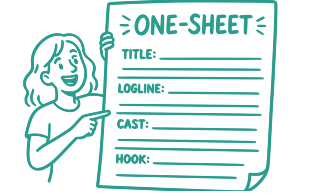
A one-sheet for a reality TV pitch is a short, usually one-page document that gives a producer the cleanest version of your unscripted show idea. It is not a mini pitch deck, and it is not a place to squeeze in every detail you have developed. Its job is simple: make the show easy to grasp.
A strong one-sheet usually includes the title, logline, show type, short overview, key people or access, what happens in a typical episode, why the idea feels timely, and what materials are available if someone wants to go deeper.
Think of it as the page someone reads before they decide whether to open the full deck, watch the sizzle reel, or ask a follow-up question.
What is a one-sheet for a reality TV pitch?
A one-sheet is the shortest useful version of your pitch. It should give a producer enough to get oriented: the concept, the people or world, the shape of the show, and why it might be worth a closer look.
It does not need to answer every question. It needs to answer the first questions clearly.
A producer should be able to read your one-sheet and come away knowing what the show is, who or what it follows, what kind of unscripted project it is, what makes the access or world specific, and what else exists if they want to see more.
The one-sheet is especially useful when someone does not have time to read a full pitch deck yet. It gives the idea a clean front door instead of asking a producer to wander through the whole house.
A one-sheet is not a smaller pitch deck
This is where many creators go wrong. A one-sheet should not feel like a full deck shrunk onto one crowded page. If the page has tiny type, too many sections, too many images, and no clear reading path, it stops doing its job.
The one-sheet has to make choices. It should include the information that helps someone understand the show, then leave the deeper material for the pitch deck.
A pitch deck can spend pages on cast, tone, episode structure, sample episodes, visual references, production notes, and comparable shows. A one-sheet has to suggest those things with enough clarity that the reader knows whether they want more.
The goal is not to prove everything. The goal is to make the next step easy.
What should go on a reality TV one-sheet?
There is no single required layout, but most strong one-sheets include the same core pieces.
1. Title
Start with the title at the top. The title should be easy to read and should give the page a clear identity.
It does not have to explain the whole show by itself, but it should not confuse the reader before they get to the logline.
2. Logline
The logline is usually the most important sentence on the page. A good reality TV logline explains the show in a clean, specific way.
It should give the reader a sense of the people or world, the central situation, and the reason the show keeps going. The logline does not need to do everything, but it should give the rest of the page a strong starting point. For more on that sentence, read how to write a reality TV logline.
3. Show type
Name the kind of reality TV show you are pitching.
Is it a docuseries, documentary series, lifestyle format, competition format, dating show, social experiment, workplace series, talent-led show, transformation series, or hybrid?
This helps the producer understand how to read the idea. A character-driven docuseries and a competition format are not evaluated the same way.
4. Short overview
The overview should be short, usually one or two tight paragraphs. Explain what the show is, who or what we follow, what viewers watch happen, and why the idea has enough life for multiple episodes or a limited series.
Avoid writing a broad mission statement. A producer does not need to know only why the topic matters. They need to know what the audience is watching.
5. Key people, world, or access
For many reality TV ideas, this is where the pitch becomes real.
Who are the people? What world are we entering? What access do you have? Is there an attached expert, family, workplace, location, subculture, community, or talent relationship?
For a docuseries, access-driven show, or character-driven concept, do not bury this section. The people and access may be the strongest reason to keep reading.
For a format without attached cast, explain the casting world instead. Who would participate? What kinds of people make the structure work? Why would they create story?
6. What happens in a typical episode
A one-sheet should give a quick sense of the show’s shape. You do not need a full episode breakdown, but the reader should understand what repeats.
Does each episode follow a client, case, challenge, date, transformation, event, investigation, build, trip, or decision? A simple sentence or short paragraph can be enough.
For example: Each episode follows one overwhelmed family as the team redesigns the most chaotic room in their home, while the family confronts the habits that made the space unworkable in the first place.
That tells the reader what they are watching and why the idea can continue.
7. Why now
A short “why now” line can help place the idea.
This does not need to chase trends. It can point to a cultural conversation, audience curiosity, a growing subculture, changing behavior, a timely industry, or access that is available now.
Keep it grounded. The one-sheet should not oversell the timing. It should make the idea feel relevant.
8. Comparable shows
Use one or two comparable shows if they help. Comps should clarify tone, audience, structure, or buyer lane.
They are not there to claim your project will become the next major hit. They are there to help the reader understand where the show lives.
A useful comp line might sound like: For viewers who like the warmth and transformation of [Show A], with the workplace pressure of [Show B].
Keep it simple. Too many comps can make the idea feel unfocused.
9. Available materials
If you have more materials, say so.
This might include a pitch deck, sizzle reel, casting tape, visual reel, proof-of-authorship record, access notes, location photos, talent materials, or additional development materials.
The one-sheet should let the reader know there is more to review without turning the page into a storage closet.
10. Creator and contact information
End with your name, company if relevant, and contact or submission details. Keep this clean.
The one-sheet is about the show first. Your information should be easy to find, but it does not need to take over the page.
What is the difference between a one-sheet, pitch deck, and treatment?
These terms can overlap in unscripted TV, and different companies may use them differently. Still, each document usually has a different job.
A one-sheet gives someone the core idea on one page.
A pitch deck is longer and more visual. It can include the logline, overview, cast, world, access, episode structure, sample episodes, tone, comparable shows, production notes, and available materials.
A treatment is usually more written. It may go deeper into story, characters, format, episode flow, tone, or season direction. In some unscripted circles, people may use “treatment” and “deck” loosely, so clarity matters more than the label.
The safest approach is to make each document useful on its own. The one-sheet introduces the idea. The deck gives the fuller case. The treatment, if you have one, should add written depth rather than repeat the same summary in a longer form.
Do you need a one-sheet if you already have a pitch deck?
Often, yes. A pitch deck is helpful when someone is ready to spend more time with the project. A one-sheet is useful before that moment. It gives the reader a clean way to decide whether the deck is worth opening.
This is especially helpful when you are sharing a concept through a platform, submission process, introduction, or short email. The person on the other side may not be ready to read 15 slides. They may need the quick version first.
A one-sheet also forces you to make the idea simpler. If you cannot explain the show clearly on one page, the full deck may be carrying too much confusion.
That does not mean every project needs every material. Some early conversations may start with a logline. Some producers may ask for a deck. Some concepts benefit from a sizzle reel. But a good one-sheet is useful because it shows whether the basic pitch is clear. For the fuller version, read how to write a reality TV pitch deck.
How long should a one-sheet be?
A one-sheet should usually be one page. That sounds obvious, but many creators try to stretch it into two or three pages because they do not want to leave anything out.
The discipline of the format is the point. A one-sheet should make the idea easier to understand, not give the reader everything you know.
Use short paragraphs. Use clear section labels. Leave enough white space for the page to breathe. If the design feels cramped, cut copy before you shrink the font.
A one-sheet that is easy to read is more useful than a one-sheet that contains every detail.
How should a one-sheet look?
A one-sheet should look clean, organized, and easy to scan.
It does not need to be heavily designed. A strong title, one clear image or visual direction, a readable layout, and a few well-labeled sections are usually enough.
Use visuals only if they help explain the show. A real photo of the cast, location, world, or access may be more useful than a generic image that only decorates the page. If the show is visual by nature, the image can do real work.
The design should guide the reader through the page in the right order: Title. Logline. What the show is. Who or what gives it life. What happens repeatedly. Why now. What else is available.
That is enough.
Common one-sheet mistakes
Mistake 1: Trying to fit the whole deck onto one page
A one-sheet should not feel cramped. Choose the information that helps someone understand the show without crowding the page.
Mistake 2: Writing a vague logline
If the logline does not explain the basic idea, the reader may not know how to interpret the rest of the page.
Mistake 3: Hiding the cast or access
For many reality TV ideas, the people, world, or access are the reason to keep reading. Do not bury them at the bottom.
Mistake 4: Using design to cover up an unclear idea
A polished layout helps, but it cannot fix a concept that does not explain what the viewer is watching.
Mistake 5: Forgetting the next step
A one-sheet should make it easy for someone to know what else exists, such as a deck, sizzle reel, cast tape, or additional materials.
The best one-sheets do not try to say everything. They make the first read easier. A producer should finish the page knowing what the show is, why it might work, and whether there is more worth opening.
Your deliverable: a one-sheet draft
Before you design the final version, write a simple one-sheet draft in plain text. Keep it to one page if possible. Do not worry about layout yet. First, make sure the information is clear. Use this checklist:
- Title
- Logline
- Show type
- Short overview
- Key people, world, or access
- What happens in a typical episode
- Why now
- Comparable shows
- Available materials
- Creator and contact information
Once this draft works, the design becomes easier. If the plain-text version is confusing, a more polished layout will not solve the problem.
How this helps on Showrilly
A producer looking at your Showrilly concept page is making quick decisions. They are not studying your idea for an hour before they decide whether it makes sense.
A strong one-sheet gives them a clean first read. It helps them understand the title, logline, show type, access, episode shape, and available materials without hunting through a full deck.
That matters because confusion usually does not create curiosity. If a producer has to guess what the show is, who it is about, or why it keeps going, they may move on before they ever reach your deeper materials.
Showrilly gives you a place to publish your concept, organize your pitch materials, and make the project easier for verified producers to review. The one-sheet can act as the bridge between a quick concept page and a fuller pitch deck.