



A reality TV format is an unscripted show built around a repeatable structure. The cast, location, challenge, or outcome may change, but the basic setup still works. That is what separates a format from a one-time documentary idea or a purely character-driven docuseries.
A dating show where new couples go through the same relationship test each season is a format. A competition series where players move through challenges and eliminations is a format. A transformation show where each episode follows a client from problem to reveal may also be a format.
The useful question is simple: does the show depend mostly on a repeatable structure, or does it depend mostly on specific people and access? If you know that, you can develop and pitch the project with more focus.
What does “format” mean in reality TV?
In reality TV, a format is the design of the show. It includes the setup, participant logic, rules, episode shape, source of pressure, and ending.
A strong format gives viewers a promise they can understand. They know what kind of experience they are coming back for, even if the exact cast, challenge, case, or result changes.
A format might answer:
- Who is involved?
- What do they have to do?
- What makes the situation difficult?
- How does the episode end?
- Can the same idea work again?
That last question matters. A format is not just a good situation. It is a show shape that can keep producing new versions of itself.
That does not mean a format should feel mechanical. The structure gives the show a path. The people inside it make it feel alive.
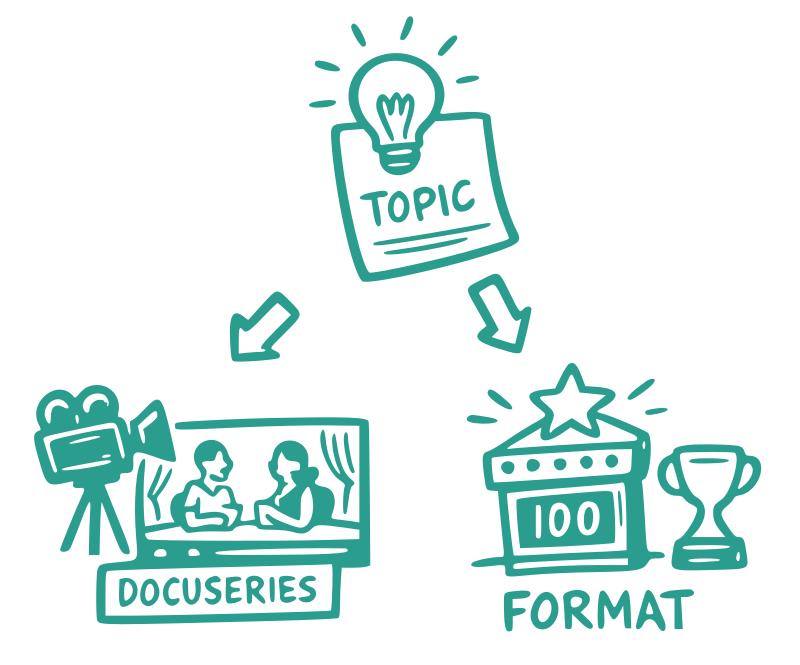
A topic is not a format
A lot of format pitches start as topics. That is normal. The problem is stopping there.
A topic might be weddings, restaurants, divorce, influencers, haunted houses, dating after 50, family businesses, or young entrepreneurs. Any of those could become a reality TV show. None of them is automatically a format.
“Dating after 50” is a topic. “Recently divorced singles over 50 move into a shared retreat where their adult children secretly help choose their dates” is closer to a format. Now there is a setup, casting logic, built-in relationships, and a source of tension.
“Restaurants” is a topic. “Each episode, two struggling family restaurants swap owners for one week and are judged by their own staff” is a format. There is a process, a point of comparison, and an ending.
A format takes a topic and gives it shape. Without that shape, the idea may still be interesting, but it may belong in a different lane.
A format is not just a hook
A hook is the sentence that makes someone lean in. A format is what keeps the show working after that first sentence.
“Strangers date without seeing each other” is a hook. To become a format, the idea needs more underneath it. How are the participants chosen? How do they communicate? When do decisions happen? What happens if they reject each other? How does an episode build? What is the season aiming toward?
A strong hook is useful, but if the structure behind it is thin, the pitch can collapse quickly. Producers may like the premise and still wonder, “Okay, but what happens in episode three?”
That is usually where a hook has to become a format.
Common types of reality TV formats
Reality TV formats come in many shapes. The categories are not strict, and many shows blend more than one type. Still, naming the lane helps you understand what the idea needs.
A competition format usually has contestants, challenges, judging, progression, and a winner or final result.
A dating format uses romantic choice, compatibility, social pressure, reveals, commitments, or relationship tests.
A game show format is built around rules, rounds, questions, tasks, scoring, prizes, and a repeatable play structure.
A transformation format follows a process of change. That might involve homes, businesses, style, food, wellness, relationships, or personal behavior.
A social experiment format places people into a designed situation to reveal choices, beliefs, relationships, or group dynamics.
A lifestyle format may follow a repeatable process around food, home, travel, design, weddings, parenting, business, health, or expertise.
A talent or performance format is built around skill, coaching, judging, growth, and public demonstration.
These labels are not there to trap the idea. They help you see what kind of structure the pitch has to explain.
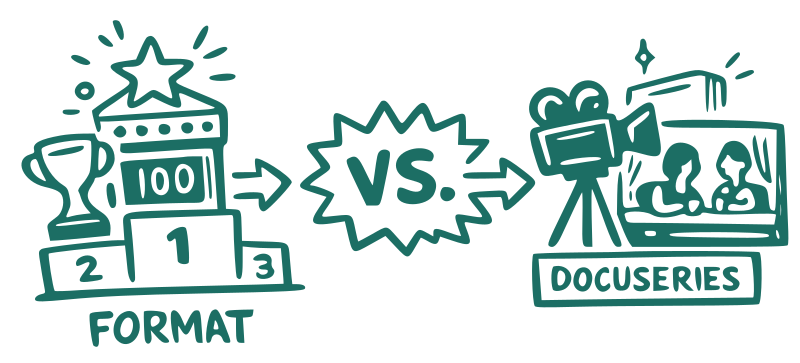
Format vs. docuseries: what is the difference?
The simplest difference is this: a format is driven by structure and can often be made again with new participants. A docuseries is driven by access, people, and unfolding story. It usually depends more heavily on the specific people, world, or situation you are following.
For example, a show about one family running a funeral home may be a docuseries if the appeal comes from that family, their relationships, their business, and their real-life conflicts.
A show where different families compete each week to plan the most meaningful funeral on a budget would be closer to a format. Possibly an unusual pitch meeting. Still a useful example.
The distinction matters because producers evaluate the two differently.
For a docuseries, they may ask: Do you have real access? Are the people watchable? Is the world specific? Can the story keep unfolding?
For a format, they may ask: Does the structure work? Who participates? What creates pressure? What repeats? Could this survive more than one episode?
Some shows are both. A workplace series may follow real people while also using a case-of-the-week structure. A transformation show may have a strong host and a repeated process.
The point is not to force your idea into a perfect box. The point is to know what is doing the main work.
Why formats can be harder for first-time creators
Formats can be exciting to invent, but they are not always easy to sell from the page.
A docuseries pitch can often point to something real: attached talent, exclusive access, a specific family, a workplace, a subculture, a location, or footage that proves the world exists.
A format pitch often asks the reader to believe the design will work. That is harder because the value is in execution. A competition format depends on casting, challenge design, pacing, judging, stakes, reveals, and whether people behave in interesting ways once the structure is in motion.
That does not mean first-time creators should avoid formats. It means the format has to be especially easy to understand.
If the pitch is mostly “Wouldn’t it be wild if people had to do this?” it may need more development. A format needs more than a wild idea. It needs a design that can reliably create story.
What makes a reality TV format strong?
A strong reality TV format is usually simple at the center.
The premise is easy to understand. The right people are inside the structure. The rules create behavior instead of just decoration. The stakes matter to the participants. The episode has a shape. The ending gives viewers a reason to care.
That does not mean the show has to be predictable. A good format creates a path, then lets real people surprise us inside it.
The strongest formats are often easy to explain but rich enough to keep producing new moments. Simple on the outside, messy in the best way once humans get involved.
How do you know if your idea is actually a format?
Ask what would happen if you changed the cast.
If the show could still work with new participants, new locations, new cases, new couples, or new challenges, you may have a format. If the idea falls apart without one specific family, person, workplace, or story, you may have a docuseries or access-driven show.
Then ask one more question: What repeats?
If the answer is clear, you may have the beginning of a format. If the answer is vague, the idea may still be a topic, world, or premise.
For example:
- Each episode follows a new couple through the same relationship test.
- Each week, two chefs compete using ingredients from their childhood homes.
- Each episode, an expert helps a family fix one high-pressure decision.
- Each season, a new group of strangers enters the same social experiment.
Those are format-shaped ideas because the design can be used again.
Common reality TV format mistakes
Mistake 1: Calling a topic a format
A subject area is not enough. A format needs a repeatable setup, participant logic, stakes, and an ending.
Mistake 2: Relying only on the hook
A clever premise may get attention, but the structure has to explain what happens after the first moment.
Mistake 3: Making the rules too complicated
More twists do not always make a format stronger. Simple rules that create strong behavior are usually more useful.
Mistake 4: Forgetting who participates
The wrong people can make even a clever structure feel flat. Casting logic matters.
Mistake 5: Having no clear ending
Each episode or season needs a result, reveal, choice, transformation, or consequence.
The best formats are easy to explain but rich enough to keep producing new moments.
Your deliverable: a format identity check
Before you pitch your idea as a reality TV format, test whether it has a true repeatable design.
- Can I explain the format in one sentence?
- Who participates?
- Why would those people participate?
- What do they have to do?
- What creates pressure?
- What choices do participants face?
- What is at stake?
- How does a typical episode end?
- Could the idea work with a new cast, location, case, couple, or challenge?
- Is this really a format, or is it closer to a docuseries?
If you cannot answer these questions yet, the idea may still be useful. It may simply need more structure before you call it a format.
How this helps on Showrilly
When you publish a concept on Showrilly, naming the right type of show helps the pitch make more sense.
If your project is a format, your concept page should make the structure easy to understand: the hook, participants, rules, stakes, episode shape, ending, and any materials that show how the format might work.
If your project is actually a docuseries, that is useful to know too. Then the page should focus more on people, access, world, relationships, and unfolding story.
The goal is not to force your idea into a label. It is to help someone understand what kind of unscripted project they are looking at and what materials support it.